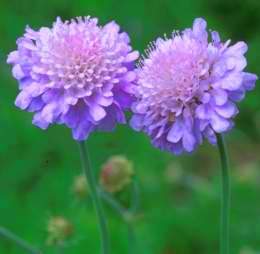
Scabiosa is a genus in the honeysuckle family, Caprifoliaceae. Many of the species in this genus have common names that include the word scabious. Another common name for members of this genus is pincushion flowers. The common name ‘scabious’ comes from the Latin word scabiosus meaning ‘mangy, rough or itchy’ which refers to the herb’s traditional usage as a folk medicine to treat scabies, an illness that causes a severe itching sensation. Scabious flowers are nectar rich and attractive to many insects including butterflies and moths such as the six-spot burnet. Seeing Scabiosa africana on the mountain, the first thought is that it must have escaped from a garden nearby. With its big mauve flowers and soft leaves, it looks just too tender and perfect to survive in the wild. But looks are misleading, for this beautiful perennial is perfectly happy in the fynbos, growing along the sheltered sandstone slopes of the Cape Peninsula. Scabiosa africana grows fast, forming evergreen mounds of velvety leaves. Many thick stems shoot from the ground, bearing large rosettes of light green leaves. These big, soft and hairy leaves are oval shaped, about 160 mm long and 50 mm wide, with ruffled edges. From the leaves, the stems grow almost 1 m longer, dividing into side branches with the typical scabious flowers at the tips. Flowering from spring to early summer, the plants are a beautiful sight with the many tall flowering stems waving in the wind. Looking at the flowers closely, one realizes that each head, which is about 50 mm across, is made up of many smaller flowers that vary in shades of mauve and white. After flowering, the heads turn into tight, bristly balls that fall apart as the seeds ripen. The dried flower stalks are often used in dried flower arrangements. Grow these this season!